


Petrol Pumps Overwhelmed, Fertiliser Plants Shutting Down
Bangladesh has imposed per-vehicle daily fuel limits as panic buying drains petrol pump stocks across Dhaka, Chattogram, and Sylhet. With LNG shipments delayed, four fertiliser plants suspended, and 30 power plants offline, the Middle East conflict is generating a cascading energy crisis far from the battlefield.

Rationing kicks in — but not because the tanks are empty
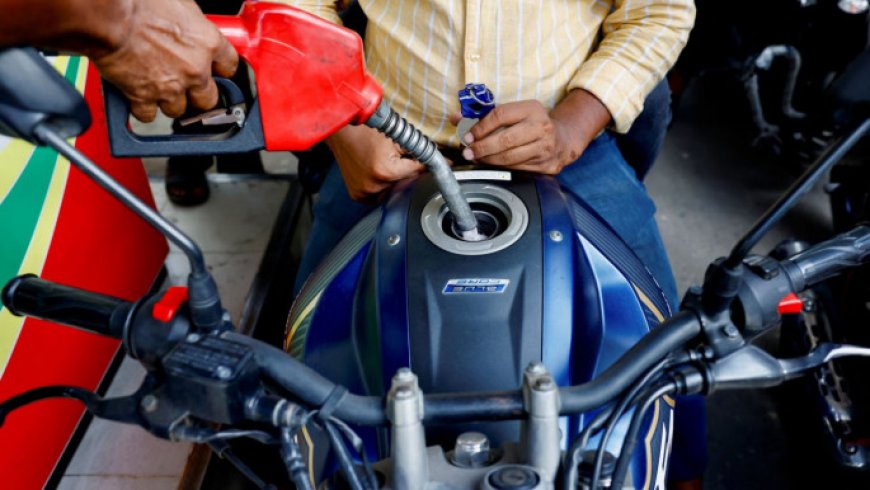
Bangladesh Petroleum Corporation moved on Friday to impose per-vehicle daily fuel limits at filling stations nationwide. The caps are specific: motorcycles may purchase no more than two litres of petrol or octane per visit. Private cars are capped at ten litres. SUVs, jeeps, and microbuses can take between 20 and 25 litres. Long-distance trucks, covered vans, and container vehicles — the backbone of the country's freight movement — are allowed up to 220 litres of diesel per trip.
The BPC was careful to frame the rationing not as a response to an actual shortage, but as a precautionary measure against an artificial one. "Adequate fuel stocks exist in the country," the corporation stated. "A section of people is attempting to create an artificial crisis by spreading panic and hoarding."
The numbers, at face value, appear to support that position. According to BPC data, as of early this week, diesel reserves stood at approximately 115,000 tonnes — sufficient for around nine days at normal consumption. Petrol stocks covered roughly eight days. Octane reserves stretched to fifteen. Furnace oil, used in power plants, covered two months. These are not comfortable margins, but they are not collapse either.
The problem is that consumption has not been normal. Daily diesel demand has climbed from roughly 11,000–12,000 tonnes to over 13,000 tonnes in recent days — a jump driven almost entirely by people buying more than they need, precisely because they fear they will not be able to buy enough later.
What is actually happening at the pumps
The gap between official reassurance and street-level reality is harder to explain away.
In Dhaka, filling stations in Tejgaon, Nilkhet, and near Dhaka College were found closed on Thursday evening, with no official explanation provided. A worker at one of those stations — speaking without identifying himself — said the owner had simply instructed staff to shut for the day. An Uber driver named Gautam described visiting three separate stations that evening before finding one that was open. "Some pumps are charging higher prices when no police or journalists are around," he said. "The government says there's no shortage. But half the pumps in the city are closed."
In Chattogram, drivers queuing at the Oxygen area station on Friday reported waiting over two hours. One driver, Idris Ali, arrived after Friday prayers and waited until late afternoon before reaching the pump — only to be offered fuel worth 2,000 taka, against a tank that holds approximately 6,000 taka worth. In Sylhet, similar scenes played out across multiple filling stations. In Shewrapara, Dhaka, one station manager capped motorcycle sales at 500 taka per visit.
The station manager at Meghna Model Service Centre in Paribag — one of the busiest in the capital — offered a measured explanation. "There is no shortage here. We have not refused anyone. People are seeing things on Facebook and coming in frightened." That assessment may be accurate. It does not change what is visible on the ground.
The deeper energy picture
Beneath the queues and the rationing notices, a more structural problem is developing — one that has less to do with petrol for motorcycles and more to do with whether Bangladesh can keep its industries and power grid running.
Two scheduled LNG cargo shipments have been delayed due to disruptions in the Gulf. Petrobangla's chairman confirmed the delays, adding that replacement bookings had been made on the spot market — though spot prices have surged approximately 35 percent since the conflict began. Kuwait Energy, one of Bangladesh's suppliers, has indicated it cannot deliver two cargoes scheduled for 15 and 18 March following a terminal attack earlier this week.
Four state-owned urea fertiliser plants — in Ghorashal, Chattogram, Jamuna, and Ashuganj — have suspended operations due to natural gas shortages. Together, they supply a significant share of the country's domestic fertiliser needs. Their shutdown, if extended into the agricultural planting season, carries consequences that go well beyond the energy sector.
As of Friday, 30 of Bangladesh's 143 power plants were not generating electricity, due to either gas or liquid fuel shortages. The Bangladesh Power Development Board is currently supplying between 12,000 and 13,000 megawatts — a figure that officials acknowledge may prove difficult to sustain if supply disruptions persist through Ramadan.
Qatar, Bangladesh's primary LNG supplier under government-to-government agreements, accounts for roughly 65 percent of the country's imported gas. That supply chain runs through the Strait of Hormuz. Four of the nine LNG cargoes scheduled for March had already crossed the strait before Iran's closure declaration, Petrobangla confirmed. Five had not.
Scrambling for alternatives
The government is moving on multiple fronts to secure alternative supplies, though the scale of the task is not straightforward.
Emergency import negotiations are under way with Singapore, Malaysia, China, and African suppliers. Saudi Aramco has reportedly pledged refined oil shipments routed from outside Saudi territory — bypassing the Hormuz corridor. BPC's commercial director indicated that countries with which Bangladesh holds government-to-government supply agreements may have surplus cargoes available, and that discussions are ongoing.
Indonesia, however, has confirmed it cannot divert LNG supplies to Bangladesh, citing domestic demand. China and India are both prioritising their own requirements in the current tight market. Dr M. Tamim, a petroleum engineering professor at BUET, described the situation as one that could deteriorate gradually. "Availability will be a major challenge," he said, while adding a note of cautious optimism: "I believe the Hormuz Strait will not stay closed long. The world cannot sustain these price pressures indefinitely."
Whether that optimism is warranted depends on developments over which Dhaka has no influence.
Prime Minister Tarique Rahman has made a public gesture toward austerity — halving the lights in his office and setting air conditioning to 25 degrees. The Energy Ministry has urged citizens to limit private vehicle use, switch to public transport, and avoid decorative lighting during Ramadan. The BGMEA, representing garment exporters, has called for a full waiver of duties, taxes, and VAT on fuel and gas imports to cushion manufacturers from rising energy costs.
What the government is saying — and what it is not
Energy Minister Iqbal Hasan Mahmood Tuku inspected filling stations in Asad Gate on Friday afternoon and delivered a message of calm. "There is no reason to be unsettled. Adequate fuel reserves exist. The government is monitoring the situation around the clock." State Minister Aninda Islam Amit, visiting Paribag stations the same evening, announced that rationing through a formal receipt-based system would begin Sunday — requiring buyers to present their previous purchase receipts before obtaining more fuel.
What neither official addressed directly was why multiple filling stations in the capital were closed on the same day that official statements insisted supply was normal. Nor did they clarify what accountability mechanism exists for stations found charging above the government-fixed price — a practice that Uber driver Gautam described as effectively open when enforcement attention is absent.
The gap between what is being said in official statements and what drivers, delivery workers, and transport operators are experiencing at the pump is not simply a communications problem. It reflects a genuine tension between a government trying to prevent a self-fulfilling panic and a public that has, over years of similar situations, developed reasonable scepticism about those reassurances.
A region that can't afford to wait
Qatar's energy minister warned this week that Gulf producers could halt exports within weeks if the conflict escalates further — a development that would push global oil prices toward $150 per barrel, according to an interview with the Financial Times. Refined oil prices have already risen more than $22 per barrel since Monday. Diesel jumped from $80 to $109 per barrel in the same period, creating a situation in which the government is absorbing losses of over 40 taka per litre at the pump — a subsidy it cannot maintain indefinitely.
Bangladesh imports nearly all of its refined petroleum products. Crude oil, which accounts for roughly a fifth of total supply and is processed domestically at the Eastern Refinery, comes primarily from Saudi Arabia and the UAE — both Gulf routes. The country's energy architecture was not designed with a Hormuz closure in mind. Few countries' were.
Al Amin, the motorcycle driver in Paribag, will return to the pump tomorrow. He will join whatever queue has formed, wait however long it takes, and try to extract enough fuel to earn the day's income his family depends on. He does not follow the LNG spot market or the BPC's reserve calculations. He knows that two litres is not enough, that the line will probably be longer tomorrow, and that the war in the Middle East shows no immediate sign of ending.
visit how oil price increase
What's Your Reaction?
 Like
0
Like
0
 Dislike
0
Dislike
0
 Love
0
Love
0
 Funny
0
Funny
0
 Wow
0
Wow
0
 Sad
0
Sad
0
 Angry
0
Angry
0










Comments (0)