


Disrupting supply chain attacks on npm and GitHub Actions
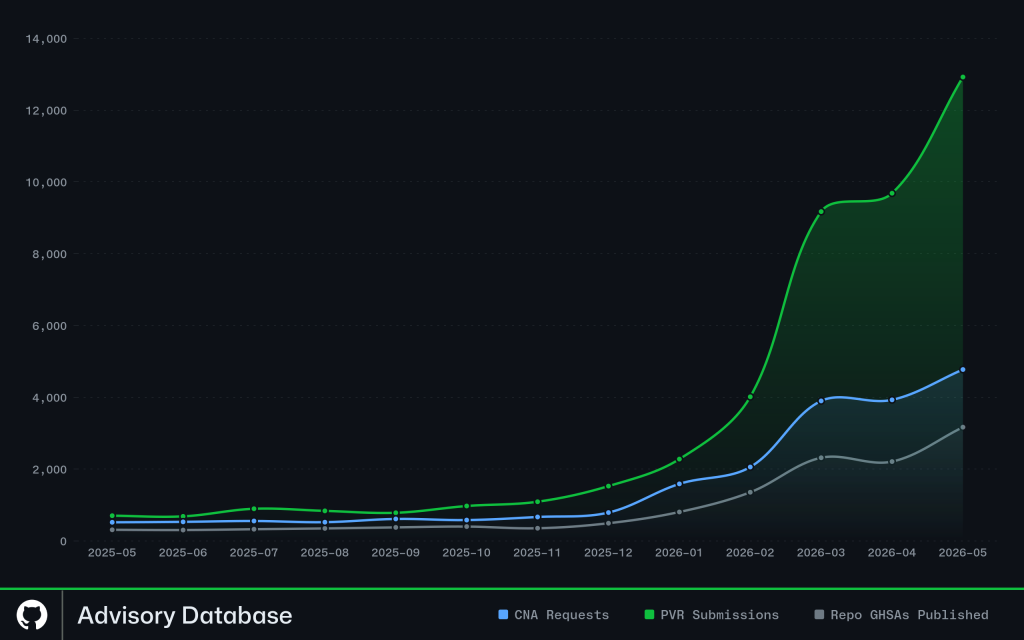
In the past year, there’s been a pattern of supply chain attacks that target weaknesses in package repositories and CI/CD systems to quickly spread malware to hundreds of open source projects. This malware seeks to exfiltrate credentials both to broadly spread the attack, as well as for later exploitation.
We’ve written a few times about our plans for hardening the supply chain: Our plan for a more secure npm supply chain in September 2025, Strengthening supply chain security: Preparing for the next malware campaign in December 2025, and What’s coming to our GitHub Actions 2026 security roadmap in March 2026. In this post, we’re updating you on changes we’ve implemented that directly disrupt some of the most common and impactful supply chain attack techniques.
Anatomy of supply chain attacks
Supply chain attacks chain together several weaknesses, and there is no single security capability that can stop them. Addressing them takes a holistic approach, prioritizing the mitigations that break the most impactful links in the attack chain. Our teams have been studying these attacks to deploy several improvements that disrupt them and limit their impact. This is possible thanks to collaboration with the security research and developer communities.
The attacks vary in how they spread across the software ecosystem. However, most of these attacks follow similar techniques to gain initial access to a project, escalate privileges, and distribute across users and software. Improvements made to npm and GitHub Actions in the past few months have been focused on cutting off specific, common techniques and providing ways for customers to identify and respond to these attacks.
Initial compromise
Attacks start by compromising a single project, often by directly compromising a maintainer’s account or by targeting the project’s actions workflows.
- npm adds preventive account protection for high-impact accounts (June 2026): Frequently, attacks start with a phishing campaign targeting maintainers. With this change, high-impact npm accounts are now put into a read-only mode for 72 hours when they change their email or use a 2FA recovery code. This delay allows maintainers time to respond and recover the account before their account can be used to start an attack.
- Safer pull_request_target defaults for GitHub Actions checkout (June 2026): A common vulnerability in a project’s CI/CD pipelines are “pwn requests,” where a workflow triggers on pull requests from forks and then executes user-submitted and untrusted code from that fork. We changed the default behavior of
actions/checkoutto prevent the checkout of untrusted code from forks in commonly exploited triggers unless you explicitly opt-out (after reviewing your risk). This change and its backport to older versions cut off one of the most common vulnerable code patterns leading to code execution in GitHub Actions CI/CD workflows and initial project compromise. - Control who and what triggers GitHub Actions workflows (June 2026): Maybe you’d prefer to opt-out of these risky action triggers altogether or limit who can trigger them. This new control lets you set enterprise, organization, or repository level policies on who is allowed to trigger workflows and what trigger types are allowed. These workflow execution policies provide a governable and customizable layer of least-privilege around Action workflows that reduce the attack surface of your CI/CD infrastructure.
- Read-only Actions cache for untrusted triggers (June 2026): After an attacker has achieved code execution in an Actions workflow, they then look to escalate to more privileged workflows (and therefore credentials) through poisoning the cache entries shared across workflows. With this change, we restrict the ability for less trusted workflows to modify the cache shared with other workflows. This directly closes a common path attackers have used to turn a vulnerability with limited impact into one that compromises highly privileged credentials used by release and publishing workflows.
Exfiltrate credentials
Once an attacker has access to a single package, they then focus on detecting and exfiltrating credentials to gain further access and use in later exploitation across ecosystems.
- npm trusted publishing now supports CircleCI (April 2026): The number one thing you can do to disrupt these attacks is to remove long-lived credentials from your CI/CD pipeline. Trusted publishing is a great way to authorize publishes to your package repository without a long-lived credential. By adding CircleCI as a trusted publishing provider, we’ve made it possible for more people to remove the credentials these attacks attempt to exfiltrate.
- Actions network firewall (In technical preview): This technical preview logs all outbound network traffic from your Action workflow runs so you can detect unusual behavior like pulling down malicious code or exfiltrating credentials to a new domain. Future work will enable network egress restrictions and policies to block these attacks before they lead to further escalation and exfiltration.
Propagating the attack
With the credentials harvested from the previous step, attackers attempt to use those credentials to distribute their malware and compromise more projects and maintainers as quickly as possible.
- Staged publishing for npm (May 2026): With staged publishing, it’s not enough to have credentials to publish a new package on npm; those packages are staged until additional approval and 2FA authentication is provided in the npm cli or on npmjs.com. This opt-in security control allows maintainers to ensure that any version of their package published has gone through this additional authorization. By decoupling the credentials used in CI/CD pipelines and automation from those that can publish to the registry, the attack chain from a CI/CD pipeline to malware distribution is cut off.
- Upcoming breaking changes for npm v12 (June 2026): To spread their malware as quickly as possible, attackers use npm install-time scripts to exfiltrate credentials instead of waiting for code to be executed by the package at runtime. With npm v12, we are rolling out a breaking change that disables these install scripts by default. Since install scripts have legitimate use within the package installation processes that several popular packages rely on, you can reenable them by approving specific scripts. Additional vectors for install-time code execution have also been blocked by disabling dependencies via git or remote URLs by default.
- Dependabot version updates introduce default package cooldown (July 2026): Attackers rely on speed, hoping a malicious release gets pulled into as many downstream projects as possible before anyone notices. Version updates through Dependabot now wait until a release has been available for at least three days before opening a pull request, giving detection signals time to surface before a malicious release reaches your project. This cooldown is on by default, and security updates still open immediately, so critical fixes are never delayed.
Identifying and responding to supply chain attacks
In parallel to hardening npm and GitHub Actions to disrupt and limit the impact of supply chain attacks, we have also been working on making features and tools available to users to identify and respond to supply chain incidents that have impacted their projects and accounts.
- Self-service credential revocation for incident response (June 2026): GitHub credentials remain an ongoing target of attackers in supply chain attacks. This feature provides self-service tooling to instantly revoke all credentials for a given user in an enterprise. This builds on the enterprise-wide credential management tools for incident response released in February and allows enterprise admins and members to quickly respond if credentials have been compromised in a supply chain attack.
- Expanded credential revocation API support (March 2026): Recent attacks have included exfiltrating credentials within publicly accessible content. To help the community respond to these attacks, we have expanded support of our credential revocation API (first introduced in April 2025 for personal access tokens) to support the revocation of GitHub OAuth and App tokens. This allows the quick and self-service revocation of these leaked credentials, regardless of where they are found, and limits the lifetime during which they can be abused.
What’s Next?
Making our products more secure by default is a priority across npm and GitHub and we are prioritizing this work to target and disrupt supply chain attacks across the open source ecosystem. We’re proud of the work we’ve shipped towards this goal over the past months. There’s more to come, but we wanted to provide an update on the progress we’ve made and make folks aware of the new capabilities available to them. Be sure to follow our changelog and blog posts as we continue to roll out improvements.
Open source software is an incredible public good that we all benefit from, and this is one of several ways GitHub is working to continue to support the security, sustainability, and continued success of open source communities and the enterprises that depend on them.
The post Disrupting supply chain attacks on npm and GitHub Actions appeared first on The GitHub Blog.
What's Your Reaction?
 Like
0
Like
0
 Dislike
0
Dislike
0
 Love
0
Love
0
 Funny
0
Funny
0
 Wow
0
Wow
0
 Sad
0
Sad
0
 Angry
0
Angry
0










Comments (0)