


Iran's Revolutionary Guard Blocks Strait of Hormuz, Bars All Ship Passage
Iran's Islamic Revolutionary Guard Corps has declared the Strait of Hormuz closed to all ships, threatening roughly 20 percent of global oil trade amid ongoing US-Israeli military strikes and reports of Supreme Leader Khamenei's death.

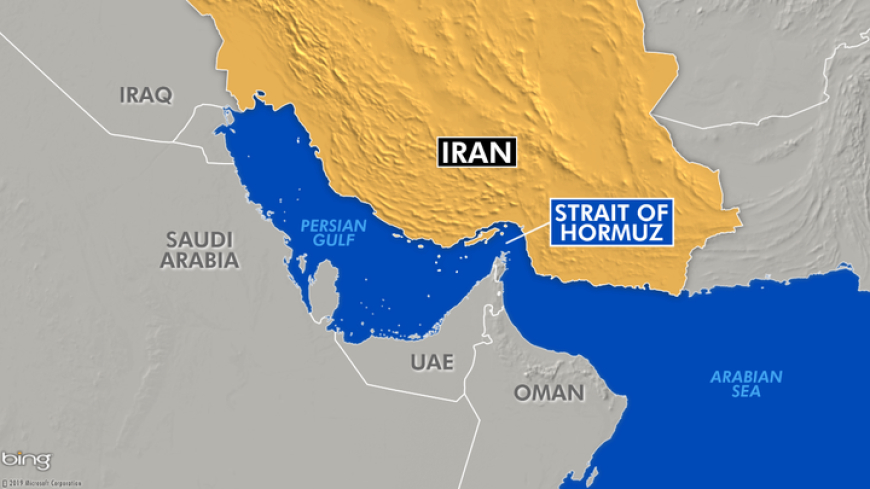
Iran's Islamic Revolutionary Guard Corps has declared that passage through the Strait of Hormuz is "not allowed," effectively announcing a blockade of one of the world's most strategically critical waterways. The announcement, carried by Iranian state media and attributed directly to IRGC naval command, came within hours of confirmed reports of Supreme Leader Ayatollah Ali Khamenei's death — and signals that Tehran, despite absorbing significant military strikes, retains both the will and the capacity to escalate.
The Strait of Hormuz is not simply a shipping lane. Roughly 20 percent of the world's traded oil passes through its 33-kilometre-wide navigable channel. Any sustained interruption — even one measured in days — carries consequences that would move through global energy markets, supply chains, and the economies of nations that have no direct involvement in the current conflict.
The declaration has not yet been tested by force. But the IRGC's history suggests the announcement is not purely rhetorical.
What the IRGC said — and how it was said
The statement, as reported by state broadcaster IRIB, was direct and unqualified. Ships seeking passage through the strait had been told, in the IRGC's framing, that entry was prohibited. No timeframe was attached. No conditions for lifting the restriction were specified.
IRGC naval forces have operated aggressively in the strait before — seizing vessels, conducting close-range intercepts, and deploying fast-attack craft in ways designed to signal both capability and intent. In 2019, Iranian forces seized a British-flagged tanker in the strait following a period of heightened tension. What is being declared now appears to go considerably further than those earlier incidents.
Whether Iranian naval forces will physically enforce the blockade against vessels from the United States, the United Kingdom, or other allied nations — and whether those nations will attempt to run the strait under naval escort — remains the most immediate question.
The energy market impact
Oil markets, already under pressure following Friday's strikes and Saturday's reports of Khamenei's death, moved sharply again. Brent crude futures climbed more than 12 percent in early trading following the IRGC announcement, with some analysts projecting further movement if the blockade holds beyond 24 hours.
The countries most immediately exposed are those in Asia — particularly Japan, South Korea, India, and China — which collectively import a substantial portion of their oil through the strait. Gulf states including Saudi Arabia, the UAE, Kuwait, and Iraq also export through Hormuz, meaning the blockade, if enforced, cuts into their revenues as directly as it disrupts their customers' supply.
Saudi Aramco has pipeline capacity that bypasses the strait — the East-West Pipeline running to the Red Sea — but its capacity covers only a fraction of the volume normally moving through Hormuz. There is no quick infrastructural workaround for a full closure.
What's Your Reaction?
 Like
0
Like
0
 Dislike
0
Dislike
0
 Love
0
Love
0
 Funny
0
Funny
0
 Wow
0
Wow
0
 Sad
0
Sad
0
 Angry
0
Angry
0








Comments (0)