


1st-ever X-rays in space offer hope for possible patients headed to the moon

A miniature X-ray machine is set to transform astronauts' health prospects following a successful test in orbit. As a bonus, as well as checking for broken bones on the moon, the technology could also be distributed to small towns and villages in rural areas to provide enhanced medical care far from major hospitals.
For much of the Space Age, astronauts have only had access to ultrasound machines as tools to diagnose injuries. Unlike ultrasound, which requires a medium through which sound waves can pass, X-rays can be used in a vacuum. The problem with X-ray machines is that traditionally they have been big and bulky, they use a lot of power, they have difficulty imaging something that isn't perfectly stationary (resulting in blurred images), and they tend to get damaged when jostled about during launch and atmospheric re-entry. Yet, as human spaceflight and voyages beyond Earth-orbit come to prominence once more, with proposals for an outpost on the moon, there is a greater chance of an astronaut being injured and therefore a greater need for medical X-rays in space.
Technology has now reached the stage where small-scale, portable X-ray devices are commonplace on Earth.
"Portable X-ray machines are in use everywhere — at the Kentucky Derby, on the sidelines of the Super Bowl and around the globe in low-resource areas — because they can run on solar power and can be operated by individuals with no medical expertise," Sheyna Gifford, who is a medical doctor and assistant professor of aerospace medicine at Mayo Clinic in Rochester, Minnesota, said in a statement.
Gifford wanted to put one of these portable X-ray devices to the test in space. The first chance her team got to simulate taking an X-ray in space conditions was during a parabolic flight in 2022 (when an aircraft simulates microgravity by climbing high on a parabolic trajectory, as in the famous "Vomit Comet") when members of the flight crew used a portable X-ray machine to produce an X-ray image of someone's hand.
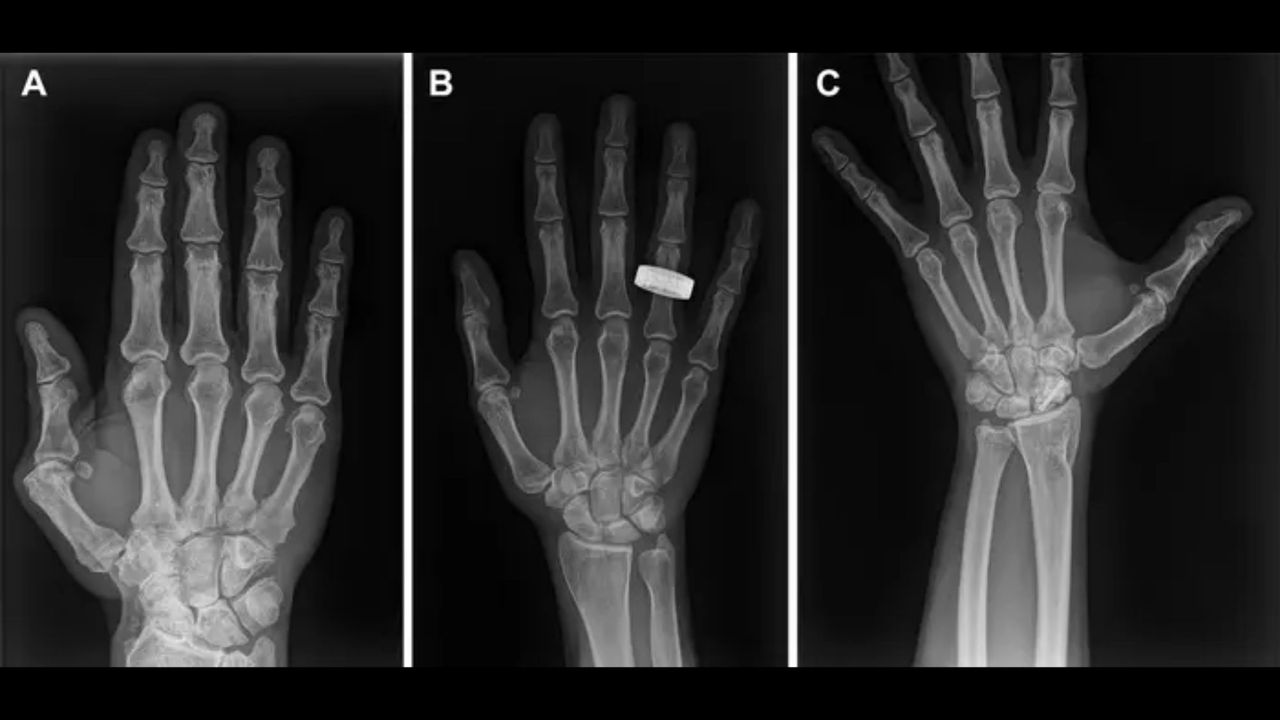
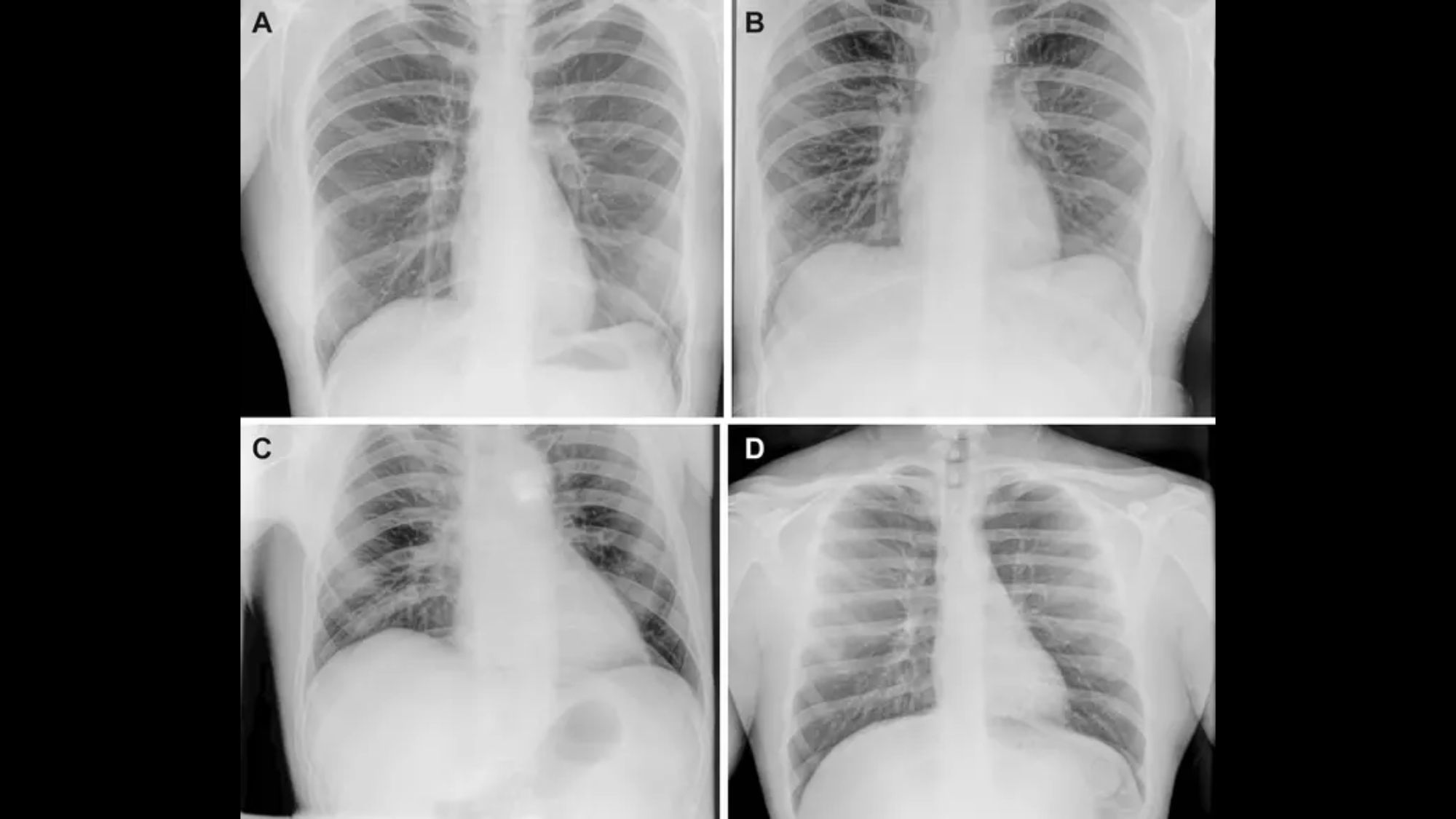
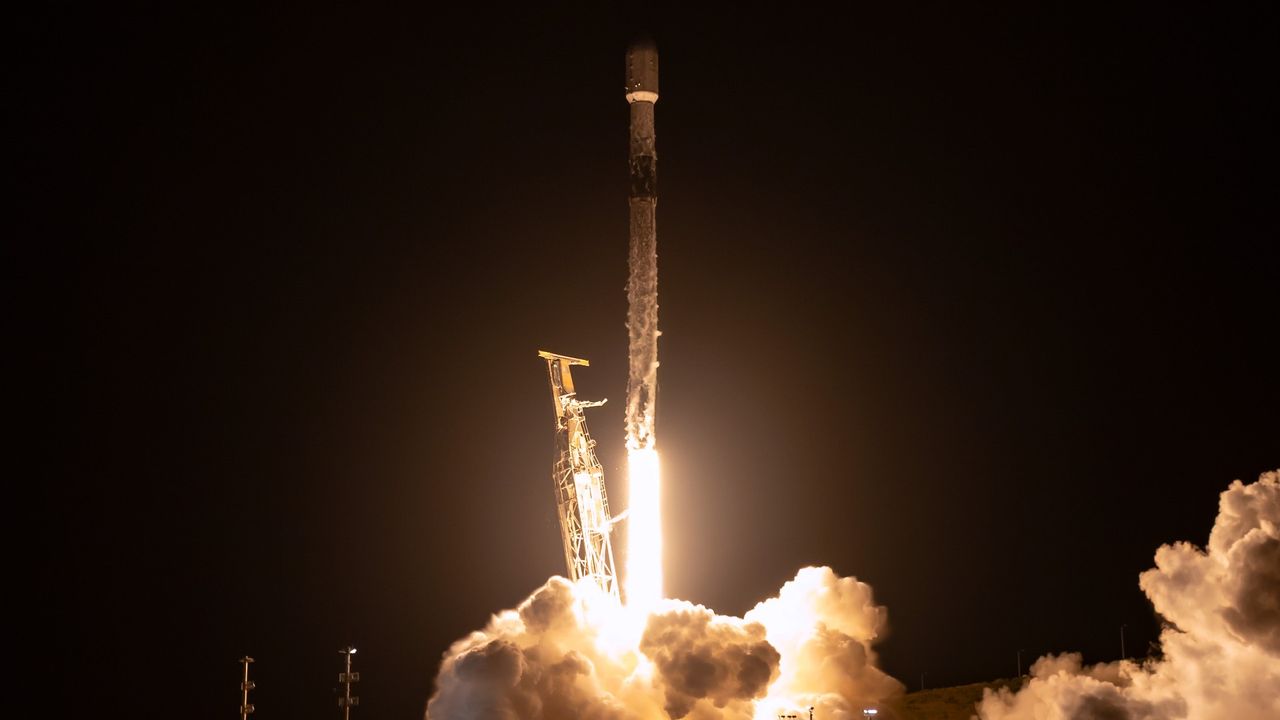
The real test, though, came on March 31, 2025, with the launch of the private Fram2 mission, which took four first-time astronauts on a 3.5-day mission around Earth on board a SpaceX Crew Dragon. The astronauts, none of whom were medical experts, received four hours training on the portable X-ray device before launch, and then while in orbit they were tasked with taking X-rays of a smartwatch, a hand, an abdomen, a pelvis and a chest. These X-ray images were recorded digitally, enabling the astronauts to review them straight away without having to develop film.
Back on Earth, three independent medical experts compared the Fram2 X-rays with similar X-rays taken prior to launch. They found that while the ground-based X-rays were better quality, the space-based ones were good enough to be used to diagnose injuries such as broken bones.
Furthermore, the X-ray device made it back to Earth on board the Crew Dragon with only minimal damage to its exterior after being buffeted around. The Fram2 crew members all reported that the X-ray machine was easy to use, and they recommended that in future it be designed to be easier to clamp securely into place inside the crew cabin.
"We believed an off-the-shelf portable system would stand a very good chance of surviving pre-launch testing and be operational in space by crew members with minimal training," said Gifford. "By acquiring the first human and equipment X-rays in space, our study demonstrates the feasibility of in-orbit radiography and expanded diagnostic capabilities for crew health and hardware evaluation."
The usefulness of X-ray machines in space extends beyond just applying them to human health. X-rays can be used to inspect potential damage to electronics and spacesuits, to diagnose problems with malfunctioning satellites, and even be strapped to lunar rovers for analyzing the surface of the moon.
The next step, says Gifford, is to make the portable systems even smaller.
"It is my hope that we can further reduce the size of portable imaging systems and improve their ruggedness and usability so they can be included in future missions," she said.
The technology can also prove its value here on Earth. Easy to use and highly portable X-ray devices that can produce digital images that can be scrutinized on a tablet or even a smartphone would be invaluable to rescue teams in remote areas or tight spaces. It would also transform medical care in rural towns and villages that are far from large hospitals — reducing the burden on those large hospitals in the process.
"Disseminating autonomous miniature X-ray systems around the globe could also change the game in public health," said Gifford. "The sky is not the limit when it comes to X-rays in space and here on Earth."
The findings from the X-ray tests were reported on July 14 in the journal Radiology.
What's Your Reaction?
 Like
0
Like
0
 Dislike
0
Dislike
0
 Love
0
Love
0
 Funny
0
Funny
0
 Wow
0
Wow
0
 Sad
0
Sad
0
 Angry
0
Angry
0











Comments (0)